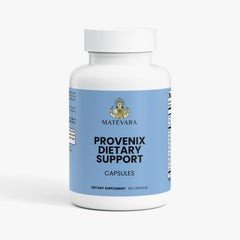

Search "cordyceps gummies" or "mushroom supplement for energy," and you'll run into the same four ingredients again and again:
- Cordyceps
- GABA
- Ginkgo
- DMAE
These ingredients get grouped together under labels like "functional mushroom blend" or "focus and energy formula" — but that packaging can make the science sound more settled than it actually is. If you've been researching a gummy like this, you may be wondering:
- Does cordyceps actually improve endurance, or is that mostly tradition?
- Does oral GABA calm you down, given it's not supposed to cross into the brain easily?
- Does ginkgo really sharpen focus in someone who isn't already impaired?
- What does DMAE actually do, and is "boosts brain power" accurate?
- Why combine a mushroom, an amino acid, a botanical, and a compound like this in one gummy?
This guide takes a balanced, evidence-informed look at each ingredient — what human research currently shows, and where the evidence is much thinner than the marketing around it.
Cordyceps vs. GABA vs. Ginkgo vs. DMAE: What's the Difference?
| Feature | Cordyceps | GABA | Ginkgo | DMAE |
|---|---|---|---|---|
| Category | Functional mushroom extract | Naturally occurring amino acid | Botanical leaf extract | Naturally occurring compound |
| Primary Research Focus | Endurance, aerobic capacity | Stress, relaxation, sleep | Cognitive function, circulation | Cognitive function (historically, in children with attention difficulties) |
| Commonly Studied For | Athletic endurance*, aerobic performance* | Subjective calm*, stress response* | Memory and attention support* | Mental alertness* |
| Key Open Question | Which cordyceps species and dose matter most | Whether oral GABA meaningfully reaches the brain | Whether benefits in healthy adults match benefits seen in cognitive decline | Whether modern controlled trials support claims made for it |
| Typical Amount in This Formula | 200 mg per gummy | 25 mg per gummy | 25 mg per gummy | 25 mg per gummy |
| Role in a Multi-Ingredient Formula | Primary active, headline ingredient | Calming counterbalance | Complementary focus botanical | Complementary alertness compound |
*These statements have not been evaluated by the Food and Drug Administration.

Why Are These Ingredients Combined?
Cordyceps, GABA, ginkgo, and DMAE occupy genuinely different research territory. Cordyceps's strongest evidence relates to physical endurance. GABA's relates to subjective calm and stress. Ginkgo's relates to cognitive function, mostly studied in people with existing cognitive decline rather than healthy adults. DMAE has the thinnest modern evidence base of the four.
Rather than four ingredients performing the same job, this is closer to a "go" ingredient (cordyceps) paired with ingredients intended to round out focus and calm — with real variation in how well-supported each one is. That's worth understanding honestly rather than assuming every ingredient in the blend carries equal evidence.
Cordyceps: The Best-Supported Ingredient in This Formula
What Is Cordyceps?
Cordyceps is a genus of fungi with a long history in traditional Chinese medicine, historically used to support "vitality" and physical endurance. Modern research has focused primarily on Cordyceps sinensis and, more recently, cultivated Cordyceps militaris.
What Does Current Research Say?
A 2025 systematic review and meta-analysis of fungal supplements in athletes pooled 14 randomized controlled trials across 528 athletes. Within that review, four RCTs specifically tested Cordyceps sinensis at 2–3 grams per day for 2–12 weeks, and pooled results showed statistically significant improvements in endurance performance, ventilatory threshold, and VO2peak compared with placebo, with low heterogeneity across studies [1].
Not every individual trial agreed — one earlier study in cyclists found no significant benefit, a difference researchers have attributed partly to variation in cordyceps sourcing and cordycepin content between products, and partly to differences between cycling and running as activities.
The Practical Takeaway
Cordyceps has a more consistent evidence base than the other three ingredients in this formula, particularly for endurance-related outcomes in trained individuals. That evidence was generated using gram-level daily doses over multiple weeks — a useful frame of reference when comparing how much cordyceps a given product actually contains.
GABA: A Calming Amino Acid With a Real Scientific Debate Attached
What Is GABA?
GABA (gamma-aminobutyric acid) is the primary inhibitory neurotransmitter in the human brain. It's also sold as an oral supplement, most often produced through fermentation.
What Does Current Research Say?
Here's the central complication: GABA has long been understood not to cross the blood-brain barrier easily, which raises a legitimate question about how — or whether — an oral GABA supplement could produce the calming effects associated with GABA activity in the brain.
A systematic review of 14 placebo-controlled human trials examining oral GABA intake for stress and sleep concluded that there is limited evidence for stress benefits and very limited evidence for sleep benefits, while noting that researchers still don't fully understand the mechanism by which oral GABA might act — possibilities include effects at the gut-brain axis or the enteric nervous system, rather than GABA directly entering the brain [2].
The Practical Takeaway
"GABA" on a label doesn't settle the underlying scientific question of how (or whether) oral GABA produces its proposed effects. The honest summary of current evidence is "limited and mechanistically unclear" — better than "unstudied," but well short of "proven."
Ginkgo: Strong Reputation, Mixed Modern Evidence in Healthy Adults
What Is Ginkgo?
Ginkgo biloba is a tree leaf extract with a long history of use in traditional Chinese medicine and one of the most widely sold "brain" supplements on the market today.
What Does Current Research Say?
Much of ginkgo's reputation stems from research in people with cognitive impairment or dementia, where some meta-analyses have reported modest benefits. The picture looks different in healthy adults specifically. A meta-analysis pooling randomized controlled trials in healthy individuals — with over 1,100 participants across the memory measures alone — found effect sizes that were non-significant and close to zero for memory, executive function, and attention, and found no relationship between effect size and dose, trial duration, or participant age [3].
The Practical Takeaway
Ginkgo's better evidence applies to people with existing cognitive decline, not necessarily to a healthy adult looking for a focus boost from a gummy. That distinction — who a study actually included — matters more than the ingredient name alone.
DMAE: The Least-Studied Ingredient in This Formula
What Is DMAE?
DMAE (dimethylaminoethanol) is a naturally occurring compound, marketed as a precursor to the neurotransmitter acetylcholine, which is involved in memory and attention.
What Does Current Research Say?
DMAE's research history is older and thinner than the other three ingredients here. Most of the historical human research dates to the 1970s and focused on children with attention and learning difficulties, with mixed results. Later controlled trials in Alzheimer's patients found no cognitive benefit from DMAE, and modern, well-powered randomized trials in healthy adults are largely absent from the literature.
The Practical Takeaway
Of the four ingredients in this formula, DMAE has the least modern human clinical evidence behind it. That doesn't mean it does nothing — it means the confident "boosts brain power" framing you'll see elsewhere isn't something current research actually supports.
Also in the Formula: L-Glutamine
L-Glutamine is an amino acid that serves as a metabolic precursor to glutamate and, indirectly, GABA. In this formula, it's included as a supporting ingredient rather than a headline active — most human research on L-glutamine supplementation focuses on gut and muscle-recovery contexts rather than the cognitive or energy claims associated with the other ingredients here.
Evidence Hierarchy: Understanding What Research Can — and Cannot — Tell Us
Not every study carries the same weight.
Laboratory and animal studies help researchers understand possible mechanisms but don't predict how an ingredient behaves in the human body.
Individual human clinical trials provide stronger evidence, especially when randomized and placebo-controlled, though a single trial can still be limited by sample size, duration, or the specific extract and dose used.
Systematic reviews and meta-analyses — like most of the sources cited in this guide — combine findings across multiple trials and generally represent the most reliable available evidence.
Applying this hierarchy is exactly what separates cordyceps (several RCTs, a recent meta-analysis, a specific dose range) from DMAE (older, sparser research, largely outside modern trial standards) — even though both appear on the same ingredient panel.
What's Inside One Cordyceps Gummy?
According to the current product listing, each gummy contains:
| Ingredient | Amount Per Gummy |
|---|---|
| Cordyceps Extract | 200 mg |
| GABA | 25 mg |
| Ginkgo Leaf | 25 mg |
| L-Glutamine | 25 mg |
| DMAE | 25 mg |
The suggested use is one to two gummies daily. Worth noting: most of the cordyceps research cited above used gram-level daily doses (2,000–3,000 mg) — meaningfully higher than the 200–400 mg provided by one or two gummies. That doesn't mean a smaller amount does nothing, but research conducted at higher doses shouldn't be assumed to transfer directly to a smaller daily serving.
Who Should Talk to a Doctor Before Trying a Formula Like This?
People who are pregnant or nursing, under 18, taking prescription medications, or managing an existing medical condition should consult a healthcare provider before starting any new supplement — including one combining a mushroom extract, an amino acid, a botanical, and a compound like DMAE. This is standard guidance for any multi-ingredient formula, not a reflection of a specific known risk with any single ingredient discussed here.
The Bottom Line
Cordyceps, GABA, ginkgo, and DMAE sit at very different points on the evidence spectrum, even though they're packaged together in one gummy.
Cordyceps has the strongest and most recent human evidence, particularly for endurance.
GABA's calming effects are plausible but mechanistically unresolved — evidence is limited, not absent.
Ginkgo's better-supported benefits apply mainly to people with existing cognitive decline, not healthy adults generally.
DMAE carries the thinnest modern evidence of the four, despite being marketed with some of the boldest cognitive claims.
None of this means the formula doesn't have a place in a daily routine — it means understanding which ingredient is doing well-supported work and which is doing more traditional, less-proven work is the difference between an informed purchase and a marketing-driven one.
Know what's backed by research. Know what's still traditional. And treat daily consistency, not a single gummy, as the variable actually driving any real-world result.

Looking for a Functional Mushroom Gummy Built This Way?
If you're comparing gummies like this, look for:
- Ingredients backed by cited, dated research — not just tradition or reputation
- Honest framing about which ingredients are well-studied and which aren't
- Transparent, per-ingredient milligram amounts on the label
- A format you'll actually take consistently, since none of these ingredients work from a single dose
Matevara Cordyceps Gummies bring cordyceps, GABA, ginkgo, DMAE, and L-glutamine together in a strawberry-flavored daily gummy, made in the USA.
👉 Explore the complete ingredient profile and Supplement Facts on the product
*These statements have not been evaluated by the Food and Drug Administration. This product is not intended to diagnose, treat, cure, or prevent any disease.
Research & References
[1] Shu MY, et al. Effects of fungal supplementation on endurance, immune function, and hematological profiles in adult athletes: a systematic review and meta-analysis. Front Nutr, 2025 (14 RCTs, 528 athletes; 4 RCTs specific to Cordyceps sinensis). PubMed — PMID 41280379
[2] Hepsomali P, et al. Effects of Oral Gamma-Aminobutyric Acid (GABA) Administration on Stress and Sleep in Humans: A Systematic Review. Front Neurosci, 2020 (14 studies). PubMed — PMID 33041752
[3] Laws KR, et al. Is Ginkgo biloba a cognitive enhancer in healthy individuals? A meta-analysis. Hum Psychopharmacol, 2012 (memory: 1,132 participants; executive function: 534; attention: 910). PubMed — PMID 23001963
Frequently Asked Questions
What is cordyceps used for?
Cordyceps is a functional mushroom traditionally used to support vitality and physical endurance. Modern research has focused on its effects on aerobic capacity and endurance performance in athletes, generally at gram-level daily doses over several weeks.
Does cordyceps actually improve endurance, or is that just tradition?
Human research provides some real support here. A 2025 meta-analysis of randomized controlled trials found that Cordyceps sinensis supplementation was associated with statistically significant improvements in endurance performance, ventilatory threshold, and VO2peak compared with placebo, though results weren't identical across every individual study.
Does GABA supplementation actually calm you down?
The evidence is limited and the mechanism is genuinely unresolved. GABA is known to cross the blood-brain barrier poorly, so how an oral GABA supplement might produce a calming effect remains an open scientific question. A systematic review of human trials found limited evidence for stress benefits and very limited evidence for sleep benefits.
Does ginkgo improve focus and memory in healthy people?
Not clearly. Most of ginkgo's stronger evidence comes from studies in people with existing cognitive decline. A meta-analysis specifically in healthy individuals found effect sizes close to zero for memory, executive function, and attention.
What does DMAE actually do?
DMAE is marketed as a precursor to the neurotransmitter acetylcholine, which supports memory and attention. However, modern controlled human trials supporting cognitive benefits in healthy adults are largely absent — most of the historical research is decades old and focused on different populations.
Is "traditionally used" the same as "clinically proven"?
No. Traditional use describes a long history of use in a cultural or medicinal context; clinical evidence describes what controlled human research has actually measured. An ingredient can have both, one, or neither — and it's worth knowing which applies before assuming a specific effect.
How long does it take to notice a difference from ingredients like these?
Most of the clinical research on cordyceps used consistent daily supplementation for 2 to 12 weeks before measuring endurance outcomes. These ingredients are generally studied as part of an ongoing routine, not a single-dose effect.
Who should check with a doctor before taking a formula combining a mushroom extract, GABA, ginkgo, and DMAE?
Anyone who is pregnant or nursing, under 18, taking prescription medications, or managing a medical condition should consult a healthcare provider before starting a new supplement that combines these ingredient categories.


