
If your knees feel stiff when you get out of bed, or you’ve started thinking more about bone strength than you did a decade ago, you’re not alone. Many people don’t notice their bones and joints until movement feels less easy. A long walk becomes a little shorter. Stairs ask for more effort. Recovery takes longer.
That moment can feel discouraging, but it can also be useful. Your body often gives quiet signals before it asks for bigger changes. When you respond early, you give yourself more room to support strength, mobility, and comfort over time.
A thoughtful supplement plan can help. Not as a shortcut. Not as a replacement for food, movement, or medical care. As one part of a bigger routine.
Ayurveda has long viewed healthy movement as part of balanced living. Modern research helps clarify which nutrients and botanicals may support that balance in measurable ways. That blend matters. You don’t have to choose between traditional wisdom and clinical evidence. The strongest approach often uses both.
Your Guide to Lifelong Bone and Joint Vitality
You might be here because of one specific problem. Maybe your wrists ache after typing. Maybe your hips feel tight after sitting. Maybe a parent had a fracture later in life, and now you’re wondering what you should be doing sooner.
Those are different concerns, but they point to the same truth. Bone health and joint health are connected, but they are not the same thing. Bones give your body structure. Joints let that structure move with ease.
Ayurveda has always looked at the body as an interdependent system. Your tissues don’t work in isolation. Modern nutrition science agrees. A single nutrient rarely does the whole job by itself. Calcium needs helper nutrients. Cartilage support works differently from bone mineral support. Plant compounds that support a healthy inflammatory response play a different role than structural compounds like collagen.
A useful mindset: don’t ask only, “What’s the best supplement?” Ask, “What does my body need support with right now?”
Some people need a stronger foundation for bone density. Others care more about stiffness, flexibility, and comfortable movement. Many need both.
The phrase best supplements for bone and joint health sounds simple, but the actual answer depends on form, synergy, consistency, and your own needs. That’s why a smart routine starts with understanding how your body is built.
The Architecture of Your Body How Bones and Joints Work
Your body works a bit like a well-designed building. Bones are the frame. Joints are the moving connections. Cartilage acts like padding between hard surfaces. Muscles and connective tissues help keep everything aligned and stable.

Bones are living tissue
Many people think of bones as fixed and solid, almost like stone. They aren’t. Bone is living tissue that constantly remodels itself. Your body breaks down old bone and builds new bone all the time. That process depends on enough raw material, but also on good signaling and absorption.
If you don’t have the nutrients needed for that rebuilding process, your internal “construction crew” has less to work with. That’s one reason bone support isn’t just about taking calcium and hoping for the best.
Joints need both structure and smooth movement
A joint is where two bones meet. For that meeting point to work well, the body needs cushioning, lubrication, and stability. Cartilage is a smooth, resilient tissue that covers the ends of bones. It helps reduce friction and absorb force when you walk, squat, or turn.
When cartilage becomes stressed over time, movement can feel less fluid. That’s when people often describe stiffness, grinding, or discomfort with activity.
A straightforward way to understand:
- Bones are your framework
- Cartilage is your shock absorber
- Joint fluid helps surfaces glide
- Muscles and tendons guide movement and control load
That full system matters more than any one part.
A quick visual can make this easier to picture in motion.
Why wear and repair must stay balanced
Every step you take puts force through your skeleton. That’s normal. Healthy tissue adapts to healthy stress. Problems often show up when repair can’t keep pace with demand, or when the body lacks key nutrients that support rebuilding.
Ayurvedic tradition has long emphasized maintaining tissue quality through nourishment, digestion, and daily habits. In modern terms, that means the body needs the right inputs to maintain bone matrix, cartilage integrity, and healthy movement patterns.
Your body isn’t asking for random support. It’s asking for the right support in the right place.
Once you understand that, supplement choices become much clearer.
The Foundational Nutrients for Bone Density
Bone is living tissue. It is constantly being broken down and rebuilt, like a house under steady maintenance. To keep that structure strong, your body needs raw materials, workers, and signals that tell those materials where to go. That is why bone support works best as a coordinated system of nutrients, especially calcium, vitamin D3, vitamin K2, and magnesium.

Ayurveda has long approached tissue nourishment as a process, not a pill. Modern bone biology reaches a similar conclusion. What matters is not only what you take, but whether you absorb it, convert it, and place it into bone effectively.
Calcium provides the raw material
Calcium forms much of the mineral structure that gives bones their hardness. The National Institutes of Health Office of Dietary Supplements outlines adult calcium needs in this calcium fact sheet for health professionals, with intake targets that rise for many adults as they age.
Still, calcium by itself does not complete the job. A supplement can supply the bricks, but the body still needs the transport and signaling systems that put those bricks into the wall.
Form matters too. Calcium carbonate contains more elemental calcium, but it is usually absorbed best with food. Calcium citrate contains less elemental calcium per pill, yet it is often easier to absorb, especially for people with lower stomach acid.
Vitamin D3 helps your gut bring calcium in
Vitamin D3 increases calcium absorption from the digestive tract and supports normal bone mineralization. The NIH Office of Dietary Supplements summarizes vitamin D requirements and clinical context in this vitamin D fact sheet for health professionals.
A simple way to picture D3 is as the doorkeeper for calcium. If vitamin D status is low, some of the calcium you consume never gets used well, even if your supplement label looks impressive.
This is one reason combination formulas make more sense than isolated single nutrients.
Vitamin K2 helps direct calcium into bone
Vitamin K2 is often the missing piece in basic bone formulas. It helps activate proteins involved in calcium handling, including osteocalcin, which plays a role in binding minerals into bone tissue. A review published in Nutrients on vitamin K and bone health explains how vitamin K supports bone metabolism and why K status matters for skeletal health.
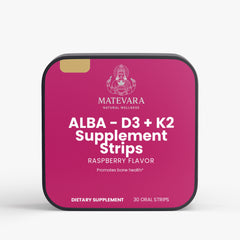
Here the synergy becomes clearer. D3 helps the body absorb calcium. K2 helps the body use that calcium in the right place. In practical terms, that pairing is one of the most useful examples of combining the modern “why” with the Ayurvedic “how.” Nourishment is not only about intake. It is also about direction, placement, and proper tissue support.
MK-7 is a commonly used K2 form because it stays in circulation longer than some other forms.
Magnesium supports the enzymes behind the scenes
Magnesium participates in hundreds of enzyme reactions, including several involved in vitamin D metabolism and bone formation. The NIH Office of Dietary Supplements details this in its magnesium fact sheet for health professionals.
This helps explain why magnesium can matter even when calcium gets most of the attention.
If calcium is part of the bone scaffold, magnesium helps run parts of the construction process. It also influences muscle function, which matters because strong bones and healthy movement are closely linked over time. Forms such as magnesium glycinate or citrate are often chosen for better tolerance than magnesium oxide.
Practical rule: bone formulas make more sense when you judge how the nutrients work together, not how impressive one ingredient looks on the front label.
Daily Recommended Intake for Core Bone Nutrients
| Nutrient | Recommended Daily Intake (Adults) | Primary Role |
|---|---|---|
| Calcium | Varies by age and sex. Often 1,000 to 1,200 mg daily | Building block for bone structure |
| Vitamin D | Varies by age and status. Often 600 to 800 IU daily as a baseline | Supports calcium absorption and bone mineralization |
| Vitamin K2 | No universal daily target has been established for bone-specific use | Helps activate proteins involved in calcium placement |
| Magnesium | Varies by age and sex. Often roughly 310 to 420 mg daily from food and supplements combined | Supports bone strength and mineral utilization |
Why combinations matter more than labels
A well-designed bone supplement respects physiology. Calcium needs D3 for absorption. D3 and K2 work better when calcium is available. Magnesium supports several steps involved in using all three well. This is the main idea many shoppers miss when they compare products by milligrams alone.
Ayurveda would frame this as intelligent nourishment. Modern nutrition frames it as synergy and bioavailability. Both point in the same direction.
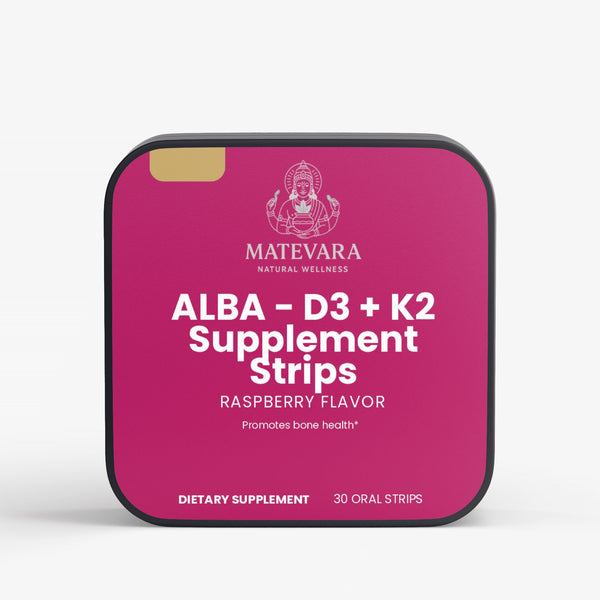
For a simple example of this pairing strategy, Matevara’s guide to calcium tablets with vitamin D3 and K2 for bone health gives a useful overview of why these nutrients are often paired rather than taken in isolation.
If you are looking at supplements in the context of aging, fracture prevention, or osteoporosis, it helps to view bone loss as a whole-body issue that involves nutrition, movement, hormone status, digestion, and long-term consistency.
Supporting Joint Comfort and Cartilage Health
A common pattern looks like this. Your bone scan may be fine, yet your knees feel stiff when you stand up, your hands complain after a long day, or your hips need a few minutes to loosen in the morning. That happens because healthy joints depend on more than bone strength. They rely on cartilage, synovial fluid, connective tissue, and steady movement that keeps the whole system nourished.
Cartilage works like a shock-absorbing cushion at the ends of bones. It helps joints glide instead of grind. Since cartilage has limited direct blood supply, it tends to respond slowly. Support usually works best when you start before discomfort becomes constant.
Glucosamine and chondroitin support different parts of the same picture
Glucosamine and chondroitin remain widely used because they focus on joint structure and comfort rather than bone mineral density. A review from the Arthritis Foundation on glucosamine and chondroitin notes that these ingredients are often used for osteoarthritis, with glucosamine discussed more for cartilage support and chondroitin more for comfort and function.
That difference can help you choose more intelligently.
If your main goal is preserving the joint’s cushioning layer, glucosamine often gets the most attention. If day-to-day ease of movement matters more, chondroitin may be part of the conversation. Many formulas pair them because joints are built from several tissues at once, not one isolated material.
Ayurveda has long approached mobility in this layered way. Dryness, friction, and stiffness are not treated as identical experiences. Modern supplement design reaches a similar conclusion. One ingredient may support the matrix of cartilage, another may support comfort, and another may support connective tissue turnover.
Collagen helps supply the framework
Collagen is the main structural protein in connective tissues. In simple terms, it acts like the woven scaffold that gives cartilage and ligaments their shape and resilience. That is why collagen belongs in a joint discussion even though it works differently from glucosamine or chondroitin.
People often expect every joint supplement to create the same effect. They do not.
A practical way to separate the roles looks like this:
- Glucosamine: commonly used to support cartilage structure
- Chondroitin: often used for joint comfort and physical function
- Collagen: provides amino acids used to build connective tissue
- MSM: supplies sulfur involved in connective tissue formation
This is also where the science and Ayurvedic perspective fit together well. Modern research looks at tissue-specific roles. Ayurveda asks whether the joint feels dry, overworked, inflamed, or depleted, then matches support to that pattern. The shared lesson is simple. Joint care usually works better as a combination strategy than a one-ingredient search.
Movement feeds the joint
Joints are designed for motion. Gentle loading helps circulate synovial fluid, which brings nourishment to cartilage surfaces much like water spreading across a sponge. Long periods of complete rest can leave joints feeling stiffer, even when rest seems like the safer choice.
If you want practical ideas, this guide to cartilage health exercise offers examples of movement patterns that may help you stay active without overloading sensitive joints.
Some people need less impact, less repetition, or better recovery. They rarely need zero movement.
Where MSM and plant support fit
MSM, or methylsulfonylmethane, is often added to broader joint formulas because sulfur is used throughout connective tissues. It is rarely a stand-alone answer, but it can make sense alongside cartilage-focused nutrients.
Plant compounds can also play a different role. Instead of trying to supply cartilage building blocks directly, they may support a healthier inflammatory response and make movement feel easier. For readers considering that route, Matevara’s turmeric formula for joint support is one example of a product centered on plant-based support rather than cartilage compounds alone.
The bigger idea is to match the tool to the job. Cartilage support, movement support, and comfort support overlap, but they are not identical. Understanding that distinction can help you choose supplements with a clearer purpose and more realistic expectations.
Ayurvedic Botanicals The Power of Plant-Based Support
You can meet two people with similar joint pain and get two very different stories. One needs more structural support, such as collagen-focused nutrients. The other feels most limited by morning stiffness, post-activity soreness, or a lingering sense of heat and irritation around the joints. Ayurvedic botanicals are often used for that second pattern.
Ayurveda has long viewed joint comfort through the lens of circulation, tissue nourishment, digestion, and inflammatory balance. Modern research uses different language, but the overlap is clear. Some herbs do not supply the raw materials that build bone or cartilage. They help create a friendlier internal environment for movement.

Curcumin from turmeric
Turmeric is one of the clearest examples. In Ayurvedic practice, it has been used to support comfortable movement and healthy tissue response. In clinical research, attention centers on curcumin, the compound studied for its effects on inflammatory signaling.
Form matters more than many labels suggest.
Curcumin is absorbed poorly on its own, so the delivery system can shape the result. Some products pair it with black pepper extract. Others use phospholipid complexes or specialized extracts designed for better uptake. That is the plant-based version of the D3 plus K2 plus magnesium idea discussed earlier. The ingredient matters, but the combination and form often determine how useful it is in the body.
Boswellia serrata
Boswellia serrata, also called Indian frankincense, brings a different kind of support. Its key compounds, known as boswellic acids, have been studied for their role in pathways linked with joint comfort and mobility. That difference matters because turmeric and Boswellia are not doing the exact same job.
A helpful way to picture it is this. If joint care were a house repair, minerals and protein-based nutrients would be the bricks and lumber. Botanicals would help manage the conditions at the worksite, so the repair process can proceed with less friction.
That is why many thoughtful formulas combine categories instead of relying on a single herb.
Where traditional use and modern evidence overlap
Clinical reviews have found that certain turmeric and Boswellia extracts may help some people with osteoarthritis-related discomfort, especially over the short term. The key word is certain. Benefits are tied to the extract used, the level of standardization, and the dose studied, not solely to the plant name on the front of the bottle. The National Center for Complementary and Integrative Health overview of turmeric also notes that turmeric is widely studied, while reminding readers that supplements can vary in composition and quality.
That is the practical lesson. A generic turmeric powder capsule and a standardized curcumin complex are not interchangeable. The same goes for Boswellia. Labels that specify active compounds give you more useful information than labels that only list the herb.
Ayurveda also tends to view bone and joint health as part of a larger picture that includes strength, recovery, and tissue nourishment over time. If you want a wider view of that tradition through a research lens, this review of shilajit benefits and the science behind this Ayurvedic resin offers a useful example of how traditional ingredients are being examined today.
A Holistic Approach to Strong Bones and Joints
You notice the pattern in ordinary moments first. Knees feel stiff when you stand up from the floor. Your grip seems weaker opening a jar. A long walk feels different than it did a few years ago. That is often when people start looking at supplements.
The rising interest makes sense, and the need is real, especially with age-related fracture risk discussed earlier. Still, a bottle works best as one part of a larger plan. Bones and joints behave more like living tissue under renovation than fixed hardware. They respond to what you eat, how you move, how well you recover, and whether your supplement routine gives the body the right raw materials in forms it can use.
Food creates the base layer
Supplements fill gaps. Meals supply the daily building blocks.
Bones need minerals, joints need protein-rich structure, and both rely on steady nourishment over time. In Ayurveda, this long-term nourishment is tied to tissue support and digestion. In modern terms, that means your body has to break down, absorb, and use what you consume. A nutrient on the label is only helpful if it reaches the tissues that need it.
A practical plate often includes:
- Calcium-rich foods: dairy if tolerated, calcium-fortified foods, sesame, tofu, and leafy greens
- Magnesium-containing foods: pumpkin seeds, legumes, nuts, whole grains
- Protein sources: eggs, fish, yogurt, lentils, poultry, or other protein-rich staples
- Colorful produce: fruits and vegetables that support recovery and overall tissue health
Movement sends the signal
Nutrition supplies materials. Exercise tells the body where to use them.
Bone responds to load. Joint tissue responds to motion. That is why a useful routine usually includes both strength work and gentle mobility. Walking, resistance training, stair climbing, or carrying groceries give bones a reason to stay strong. Swimming, yoga, and range-of-motion work help joints stay mobile and better lubricated.
A simple weekly rhythm works well for many adults:
- Add load with resistance or weight-bearing activity several times per week.
- Keep joints moving with lower-impact sessions on most days.
- Protect recovery with sleep, rest days, and enough protein.
Daily habits shape results
Stress, poor sleep, irregular meals, and inactivity can impede progress over time. Ayurveda has long emphasized daily rhythm because the body repairs better with consistency. Modern research describes the same idea through recovery, hormone balance, and behavior patterns that influence inflammation and tissue repair.
This integrated approach also applies to supplements themselves. A single ingredient rarely does the whole job. Bone support often works better when nutrients are paired intelligently, such as D3 with K2 and magnesium, because each one helps the others do their work. Joint support follows the same logic. Collagen provides structural protein, while the rest of your routine determines how well that support fits into the bigger picture. If collagen is part of your plan, Elastiva H grass-fed hydrolyzed collagen peptides is one example of a product that can sit alongside food, movement, and targeted bone nutrients.
Strong bones and comfortable joints are usually built through repetition, not shortcuts. The goal is a routine your body can use day after day.
How to Choose a High-Quality Supplement
You are standing in the supplement aisle with two bottles that both promise bone and joint support. Both look polished. Both list familiar nutrients. Yet one may give your body forms it can use well, while the other mainly gives you a longer label.
That difference matters.

Ayurveda has long cared about preparation, pairing, and digestion, not just the ingredient itself. Modern supplement science asks similar questions in different language. What form is it in. How well is it absorbed. What helps it do its job. A high-quality formula respects both views.
Start with synergy, not just label appeal
Bones are built from more than calcium alone. Joints rely on more than a single cartilage ingredient. A thoughtful formula reflects how the body functions.
For bone support, nutrients often work more like a team than solo players. Vitamin D3 helps the body absorb calcium. Vitamin K2 helps direct calcium toward bones and away from places it does not belong. Magnesium supports the enzymes involved in vitamin D metabolism and calcium use. If one piece is missing, the whole system can work less efficiently. If you want a clearer explanation of that relationship, this article on magnesium for bone health and how it activates vitamin D and enables calcium use explains why magnesium deserves more attention.
Ayurvedic practice would describe this as intelligent combining. Modern nutrition would call it synergy.
Check the form, not just the front label
Two products can list the same nutrient and still behave differently once they reach your digestive system. Bioavailability means how much of a nutrient your body can absorb and use. The name on the bottle matters, but the form on the Supplement Facts panel often matters more.
A few examples help:
- Magnesium glycinate is often chosen because it is gentle for many people and commonly well tolerated
- Magnesium oxide is inexpensive and common, but some people absorb it less well or find it harder on digestion
- Vitamin K2 as MK-7 is a specific form often used in bone-support formulas
- Minerals such as calcium citrate may suit some people better than heavier, harder-to-digest forms
- Botanical extracts should list standardization or active compounds, rather than relying on vague herb powder claims
This is similar to cooking. The ingredient list tells you what went into the pot. The form tells you how well your body can use it.
Look for proof of quality you can verify
A trustworthy supplement usually gives you details that can be checked instead of broad promises.
Look for these signals:
- Exact ingredient amounts, so you know how much you are taking
- Named forms, such as glycinate, citrate, or MK-7
- Third-party testing for purity, identity, or contaminants
- Clear manufacturing standards, such as GMP-compliant production
- No unnecessary proprietary blends when transparent dosing would be more useful
A long ingredient list can impress the eye. A coherent formula serves the body better.
Match the product to the job
Confusion often arises among buyers. A bone formula and a joint formula may overlap, but they are not the same category.
If your goal is bone density support, focus on minerals and the helper nutrients that guide their use. If your goal is joint comfort, cartilage structure, or everyday mobility, the formula may lean more on collagen, glucosamine, chondroitin, MSM, hyaluronic acid, or specific botanicals. Some products combine both categories well, but many do not.
Ayurveda adds one more practical filter. Choose support that fits your current pattern. A dry, cracking, stiff pattern often calls for nourishment and lubrication. A hot, irritated pattern may need a different herbal emphasis. That does not replace label reading. It improves how you choose.
A simple buying checklist
Before you buy, ask:
| Question | Why it matters |
|---|---|
| Does the formula combine related nutrients well? | Bone and joint ingredients often work better in smart combinations than in isolation |
| Are the ingredient forms clearly named? | Forms affect absorption, tolerance, and how useful the product may be |
| Is there third-party testing or clear quality assurance? | It adds confidence that the label matches the contents |
| Does the formula match your real goal? | Bone mineral support, cartilage support, and herbal comfort support are different needs |
A good supplement does not need the flashiest packaging. It needs clear forms, sensible combinations, and a purpose that matches your body’s needs.
Frequently Asked Questions About Bone and Joint Health
How long does it take to notice a difference from joint supplements
It depends on the ingredient and your starting point. Structural support ingredients like glucosamine, chondroitin, or collagen usually call for patience and consistency. Botanicals that support a healthy inflammatory response may feel different on a different timeline for some people.
The most useful approach is to track one or two things that matter to you, such as morning stiffness, ease of walking, or recovery after exercise.
Can you take calcium, collagen, and curcumin together
Many people do combine those categories because they serve different purposes. Calcium supports bone mineral needs. Collagen supports connective tissue structure. Curcumin is often used for plant-based support of inflammatory balance.
That said, your medication list, digestion, and health history matter. It’s smart to check with a healthcare professional before combining multiple products.
What’s the best time of day to take bone health supplements
Timing depends on the formula. Many people take bone-support nutrients with meals to support tolerance and absorption. Fat-soluble nutrients such as vitamin D and vitamin K are commonly taken with food.
Consistency matters more than finding the perfect clock time. A good routine is one you’ll keep.
Are there vegan alternatives for joint support
Yes. Plant-based options may include curcumin, Boswellia, certain mineral formulas, and some vegan glucosamine products. Collagen itself is typically animal-derived, but some people use plant-based routines that focus on collagen-supportive nutrition instead.
Your best choice depends on whether your goal is cartilage support, comfort, or broader tissue nourishment.
Should you choose bone supplements and joint supplements separately
Sometimes yes. If your main concern is bone density, a targeted mineral and vitamin formula may make the most sense. If stiffness and mobility are the bigger issues, a joint-focused formula may fit better.
Some people use both categories, but only when the ingredients are complementary and well tolerated.
Do supplements replace exercise or medical care
No. Supplements may support your routine, but they don’t replace movement, nutrition, or professional care. If you have persistent pain, a history of fractures, or major mobility changes, you should talk with a qualified healthcare professional.
Always consult a healthcare professional before starting any supplement routine.
These statements have not been evaluated by the Food and Drug Administration. This product is not intended to diagnose, treat, cure, or prevent any disease.
If you want to build a steady, evidence-aware wellness routine, explore Matevara for Ayurvedic-inspired supplements designed for daily use and supported by transparent ingredient guidance and third-party testing.


