
You finish lunch feeling fine. By three o’clock, your mind is on chocolate, chips, or something sweet with coffee. Later that night, dinner is over, but you still want “just a little something.” That pattern can feel random, or worse, like a lack of discipline.
It usually isn’t.
Cravings are often your body’s way of sending a message. Sometimes the message is about blood sugar. Sometimes it’s about stress, sleep, gut health, or the brain chemicals that shape reward and comfort. In Ayurveda, cravings can also reflect imbalance in digestion and the wider mind-body system. Modern research gives us a different vocabulary, but the basic idea is familiar. Your body pushes you toward what it thinks you need.
That’s why a list of supplements for cravings, by itself, often falls short. If you don’t understand the driver, it’s easy to choose the wrong tool. A person with a stress-driven urge to snack at night may need a different strategy than someone who crashes after a high-carb lunch.
This guide takes the more useful route. You’ll look at the why before the what. Then you’ll match evidence-backed supplements to the likely root cause, using both Ayurvedic logic and modern science. The goal isn’t perfect eating. It’s helping you make cravings feel less mysterious, less urgent, and more manageable.
Introduction Why Cravings Are More Than Just Willpower
A craving often starts before you consciously notice it. You open the pantry. You scroll food delivery options. You tell yourself you’ll have one bite, then realize you were running on autopilot.
That moment can feel emotional, but it usually has biology underneath it. Your brain is constantly reading signals from your gut, bloodstream, hormones, and nervous system. If those signals suggest low energy, stress, or reward-seeking, food becomes the fastest answer.
Ayurveda has long treated appetite as more than hunger alone. It pays attention to agni, or digestive fire, along with daily rhythm, stress, and the qualities of foods you eat most often. Modern nutrition says something similar in different terms. Stable energy, steady blood sugar, healthy digestion, and a calmer nervous system all shape what you want to eat.
Cravings make more sense when you stop framing them as weakness and start reading them as feedback.
That doesn’t mean every craving needs a supplement. Sometimes you need a real meal. Sometimes you need sleep. Sometimes your body wants stimulation because your afternoon routine is exhausting. But when cravings happen often, targeted support may help, especially when it matches the actual trigger.
A better question than “How do I stop wanting this?” is “What is this craving trying to solve?”
The Science Behind Your Cravings
Cravings usually come from a small set of biological systems that overlap. If you can identify which system is speaking the loudest, you can respond more accurately.

Blood sugar swings
Think of blood sugar like a campfire. If you feed it kindling, it burns hot and fast. If you feed it slower-burning fuel, it stays steadier. Meals heavy in refined carbs and low in protein or fiber can create that hot-fast pattern. You feel energized briefly, then hungry, foggy, or irritable soon after.
When that dip hits, your brain looks for quick fuel. Sweet or starchy foods become very persuasive because they promise rapid energy. This is one reason afternoon cravings often follow a light breakfast or carb-heavy lunch.
Common clues include:
- A predictable slump: You crave sugar or bread at the same time each day.
- Mood changes with hunger: You feel shaky, snappy, or scattered when meals run late.
- Relief after eating: The craving fades quickly once you eat a balanced meal.
Neurotransmitters and reward
Your brain doesn’t only eat for calories. It also eats for reward, comfort, and relief. Two brain chemicals matter here.
Dopamine helps drive motivation and reward-seeking. It’s part of the “that sounds good” response. Serotonin is tied to mood and emotional steadiness. When you’re stressed, low, bored, or depleted, highly palatable foods can feel like the easiest route to a quick lift.
That doesn’t mean the food is the problem by itself. The issue is that the brain starts pairing certain foods with emotional regulation. Over time, the cue becomes powerful. A stressful email can trigger the same snack urge every day.
Hunger hormones and appetite signals
You also have hormones involved in hunger and fullness. Ghrelin helps signal hunger. Leptin helps signal satiety. Stress, sleep loss, erratic meals, and highly processed eating patterns can make these messages feel noisy.
That’s why sometimes you can feel physically full but still want dessert. Fullness in the stomach and satisfaction in the brain aren’t always the same thing.
Practical rule: If a craving feels urgent, first ask whether you need energy, reward, or regulation. The answer changes what actually helps.
The gut-brain axis
Your gut and brain are in constant conversation. That’s called the gut-brain axis. Microbes in the gut interact with digestion, mood, and appetite signaling. This area still has real gaps, especially around which probiotic strains are most useful for specific craving patterns, but the overall connection is hard to ignore.
If your digestion feels off, your appetite feels chaotic, or your cravings intensify when your routine slips, your gut may be part of the picture. If you want a plain-language primer on that connection, Matevara’s guide to prebiotics and probiotics for total gut health is a useful place to start.
One of the clearest examples of this gut-brain link comes from a 2016 Imperial College London and University of Glasgow study on inulin-propionate ester. Researchers found that this gut-derived supplement reduced activity in brain reward centers when people viewed high-calorie foods, and in a follow-up meal test, participants ate 10% less pasta than the comparison group.
That’s a helpful reminder. Cravings don’t live in one place. Your gut, hormones, and brain all vote.
Key Supplements for Cravings An Evidence-Based Guide
Once you know your likely trigger, supplements for cravings become easier to sort. Some work more on taste and blood sugar, some on satiety and gut signals, and some on stress physiology.
Here’s a quick comparison.
| Supplement | Primary Mechanism | Targets | Typical Dosage |
|---|---|---|---|
| Gymnema sylvestre | Blocks sweet taste receptors | Sugar cravings, sweet snacking | Varies by product |
| Chromium | Supports glucose handling | Carb or sweet cravings linked to blood sugar swings | Varies by product |
| EGCG | May support appetite regulation | High-fat snack cravings | 300-500 mg/day |
| Inulin-propionate ester | Influences gut-brain reward signaling | High-calorie food cravings, satiety | Studied in supplement form |
| Alpha-lipoic acid with berberine | May support glucose control in combination | Blood sugar-related cravings | Varies by product |
| Magnesium | May support relaxation and stress response | Stress-related eating patterns | Varies by product |
Blood sugar support
If your cravings show up with low energy, shakiness, or a strong urge for sweets after meals, start here.
Gymnema sylvestre is one of the better-known Ayurvedic herbs for sugar cravings. Traditional practice calls it “sugar destroyer,” and modern evidence gives that nickname some support. One study summarized in a review of supplements used for sugar cravings reported up to a 22% reduction in cravings and 21% fewer servings of favorite chocolate consumed.
What makes Gymnema interesting is that it may work at the front door. Its compounds can blunt the sweet taste experience, so sugary foods feel less compelling in the moment. That’s different from supplements that work mainly through mood or appetite.
Chromium often comes up in the same conversation. The evidence is more modest. It may help some people when cravings are tied to glucose regulation, but it doesn’t appear as consistent as Gymnema for the immediate “sweet tooth” effect.
For readers comparing broad options in a weight-management context, this overview of the best supplements for weight loss gives helpful context on where appetite and metabolic support can overlap.
A practical pattern many people use is simple:
- Before a carb-heavy meal: Choose support aimed at sweet taste or glucose handling.
- During an afternoon slump: Focus first on meal composition and timing, then consider targeted support.
- When cravings follow poor sleep or stress: Blood sugar support alone may not be enough.
If sugar cravings are your main issue, you may also want to read Matevara’s article on how berberine may help with sugar cravings, especially if your cravings tend to follow meals rather than emotional stress.
Neurotransmitter and reward support
Some cravings aren’t really about hunger. They’re about relief. You want crunch after a tense meeting. You want dessert when the day feels flat. You want snack foods when you’re understimulated and tired.
In those cases, the target is often the nervous system and the brain’s reward circuitry. Lifestyle plays a significant role here, but certain nutrients may still offer support. Magnesium is commonly used when stress and poor sleep seem to be amplifying food urges. It won’t “turn off” cravings directly, but it may support the conditions that make cravings less intense.
EGCG from green tea also shows up in this category. The verified data notes small, significant drops in high-fat snack cravings at 300-500 mg/day. That’s not the same as a dramatic appetite suppressor. It’s better understood as one possible nudge for people whose snacking skews toward richer foods rather than sweets.
Gut health and satiety support
If you feel hungry soon after eating, or you stay preoccupied with food even when meals are adequate, satiety support matters. Fiber-based strategies can help by slowing digestion and changing gut-derived appetite signals.
The strongest example in the provided evidence is inulin-propionate ester, discussed earlier for its gut-brain signaling effects. It’s a useful proof of concept. Signals from the gut can change how rewarding food looks and feels.
Probiotics are more nuanced. There’s real interest in the gut microbiome and cravings, but strain-specific guidance is still limited in mainstream consumer education. That means generic “take a probiotic for cravings” advice often gets ahead of the evidence. If you use probiotics, it helps to think of them as part of gut support rather than a direct craving blocker.
Stress and hormonal support
Stress changes appetite in both directions. Some people lose it. Many crave quick comfort. When cortisol remains high, the brain often shifts toward convenient, energy-dense foods.
Adaptogens could prove beneficial. Ayurveda has long used herbs to support resilience during periods of mental and physical strain. In modern wellness routines, that usually means helping the body respond more smoothly to stress rather than swinging hard between depletion and overstimulation.
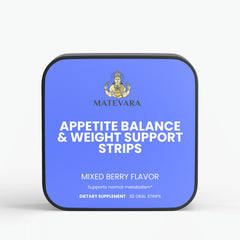
If you’re looking for one convenient option in this category, Matevara’s Livyra Appetite Balance & Weight Support Strips combine saffron extract and chromium in a plant-based format designed to support balanced cravings and snack control.
That kind of product makes the most sense when cravings feel mixed. Part blood sugar, part mood, part routine. It makes less sense if your main issue is skipping lunch and getting ravenous at four.
The right supplement should match the job. Sweet-blocking tools help a different problem than stress-support tools.
Ancient Wisdom Meets Modern Research
Ayurveda doesn’t separate cravings from digestion, mood, and daily rhythm. It asks a broader question. What pattern in the body is driving the urge?
A central concept is agni, often translated as digestive fire. When agni is steady, digestion, appetite, and energy tend to feel more regulated. When it’s weak or irregular, Ayurveda describes a buildup of ama, or poorly processed residue. In everyday terms, that can look like sluggish digestion, heavy meals that don’t satisfy, erratic appetite, or a persistent pull toward foods that feel stimulating.
Cravings through an Ayurvedic lens
A person with heavier, duller, comfort-seeking patterns may show signs of Kapha imbalance. Kapha is associated with earth and water qualities. When out of balance, it can show up as lethargy, attachment to sweetness, and eating for emotional softness rather than true hunger.
That framework doesn’t replace modern physiology. It complements it. A Kapha-type craving pattern often overlaps with today’s language around low energy, blood sugar swings, and reward-seeking eating.
Where Gymnema bridges both worlds
Gymnema is a strong example of Matevara’s “Ancient Wisdom. Modern Science.” promise. Ayurveda valued it long before receptor science existed. Modern research now suggests why it may work so well for sweet cravings.
According to a clinical discussion of gymnemic acids and sweet taste receptors, Gymnema’s active compounds can competitively block the T1R2/T1R3 sweet taste receptors on the tongue. In the cited 14-day clinical trial, this reduced the perceived pleasantness of sweet foods by 45% and lowered actual sugar intake by 28% compared with placebo.
That’s a rare moment where traditional herbal wisdom and modern mechanism line up neatly. Ayurveda observed the effect. Modern science mapped part of the pathway.
For people whose cravings rise when poor sleep lowers resilience, the Ayurvedic view of restoring balance also extends beyond food. Matevara’s article on adaptogens for sleep is a useful example of how calming the system can indirectly change appetite patterns.
Creating Your Personalized Supplement Strategy
You don’t need a complicated stack. You need a better match between the craving and the tool.

Start with the pattern, not the product
For one week, notice when cravings hit and what they feel like.
Ask yourself:
- When does it happen? Mid-afternoon, after dinner, during stress, or after poor sleep?
- What food do you want? Sweet, salty, crunchy, creamy, or high-carb?
- What happened before it? A skipped meal, conflict, a hard workout, boredom, or a short night of sleep?
That small record often tells you more than marketing copy ever will.
If you crave sweets after a long gap without food, blood sugar support and better meal structure may help. If cravings appear after emotionally draining days, nervous system support may matter more. If your appetite feels chaotic and your digestion feels off, gut-focused support may deserve attention.
Build one layer at a time
The most common mistake is starting several supplements at once. Then you can’t tell what’s helping, what’s doing nothing, or what your body doesn’t tolerate well.
A simpler approach works better:
- Pick one likely driver: blood sugar, stress, reward-seeking, or gut disruption.
- Choose one supplement category: not three.
- Keep meals steady: otherwise you’re testing supplements in the middle of avoidable chaos.
- Reassess after a consistent trial: note changes in intensity, timing, and frequency of cravings.
Emerging evidence also suggests combinations may matter. The verified data notes that pairing alpha-lipoic acid with berberine may amplify glucose control, but timing, gut health, and baseline nutrient status can affect how useful that is in real life. Combination strategies can be smart. They’re just not automatically better.
A short visual can help you think through the decision process:
Timing changes the experience
With cravings, timing often matters as much as ingredient choice.
A sweet-taste modulating herb like Gymnema may fit best before a meal or before a time when sweets are most tempting. A calming mineral may fit better in the evening if nighttime stress drives snacking. Blood sugar support often works better when paired with meals rather than used randomly.
Don’t judge a supplement too quickly if the timing is off. The same ingredient can feel underwhelming or useful depending on when you take it.
Beyond Supplements Holistic Strategies for Lasting Results
Supplements can help. They just work better when your daily habits stop pushing cravings in the opposite direction.

Sleep changes the volume
Poor sleep makes many cravings louder. Food feels more rewarding when you’re tired, and your ability to pause before acting on an urge drops. If you regularly snack hardest after short nights, start there.
A few habits usually matter most:
- Keep wake time consistent: your appetite rhythms like predictability.
- Eat dinner early enough to digest comfortably: going to bed overly full can disrupt rest.
- Reduce late-night stimulation: bright screens and mentally charged work often spill into nighttime hunger cues.
Stress creates false hunger
A stressed body often asks for fast comfort. That can look like sugar, salty snacks, or constant grazing. The food urge is real, but it may be trying to soothe your nervous system rather than meet calorie needs.
You don’t need an elaborate practice. A walk after meals, slower breathing before you eat, and fewer skipped meals can all reduce the “I need something now” feeling. Adaptogens can fit here, but they work best when paired with a stress habit you’ll consistently repeat.
Meal composition does more than calories
A meal that fills your stomach isn’t always a meal that stabilizes cravings. You want enough protein, fiber, and healthy fats to slow digestion and improve satiety. This is especially useful earlier in the day. Many afternoon cravings start with a breakfast that was too light or too refined.
Try comparing two lunches. A plain bagel and coffee may lead to a strong slump. A lunch built around protein, vegetables, fiber-rich carbs, and fat often gives a steadier afternoon. Same meal slot. Very different signals.
A supplement can support your plan. It can’t replace the basic biology of sleep, stress regulation, and satisfying meals.
How to Choose High-Quality Effective Supplements
The supplement aisle is crowded, and labels often look more scientific than they really are. A good product tells you exactly what it contains, how much it contains, and what form you’re getting.
Read the label like a detective
Start with the Supplement Facts panel. Look for the specific ingredient form, not just a vague plant name. “Gymnema sylvestre extract” tells you more than “proprietary herbal blend.” A standardized extract gives even more clarity because it aims for consistency from batch to batch.
Also check whether the formula is focused or padded with extras. Some blends add many ingredients in tiny amounts that look impressive but may not match a meaningful serving.
Look for testing and transparency
Third-party testing matters because it adds an outside check for identity, purity, and contamination. Brands may reference standards like NSF or USP, or explain their own independent testing protocols. What you want most is clarity. If a brand is vague about testing, sourcing, or allergens, that’s useful information too.
Matevara positions its products around third-party testing and transparent ingredient guidance. That won’t make every product right for every person, but it is the kind of baseline you should expect from any brand you consider.
Here’s a simple screening list:
- Ingredient clarity: exact plant, extract, or nutrient form is listed.
- Serving transparency: no hidden proprietary blend that masks amounts.
- Formulation logic: ingredients fit one purpose instead of chasing every trend.
- Use instructions: the label tells you when and how to take it.
- Brand education: there’s enough information to understand the intended role.
For a practical companion on routine planning, Matevara’s guide on the best time to take supplements can help you think beyond the ingredient list alone.
When to Consult a Healthcare Professional
Cravings are common. Severe, persistent, distressing cravings deserve a closer look.
If you’re using supplements for cravings and not seeing a clear pattern, it may be time to involve a qualified professional. A doctor or registered dietitian can help assess whether the issue is mostly behavioral, nutritional, hormonal, digestive, or related to an underlying condition.
That matters because several health concerns can show up as intense food urges. Blood sugar dysregulation, thyroid issues, medication effects, hormone-related concerns, and mental health changes can all alter appetite. Pregnancy, breastfeeding, and prescription medication use also change the safety picture.
The need for guidance is practical, not theoretical. In the U.S., about 15% of adults have tried a weight-loss supplement, with use more common among women at 21% than men at 10%, as noted in the earlier Imperial College and University of Glasgow reference. Widespread use makes individualized advice more important, especially when cravings may be masking a deeper issue.
It’s also worth remembering that a supplement’s effect depends partly on absorption and formulation. If you want a simple explainer on that topic, this article on the bioavailability of supplements offers helpful context.
Before starting any new supplement, consult a healthcare professional, especially if you take medication or manage an ongoing condition. These statements have not been evaluated by the Food and Drug Administration. This product is not intended to diagnose, treat, cure, or prevent any disease.
If you want to explore Ayurvedic-inspired, science-informed wellness tools for daily routines, visit Matevara. You’ll find plant-based supplements, transparent ingredient guidance, and educational resources designed to help you make more informed choices with your healthcare professional.