
Some days your mind feels crisp. You remember names quickly, finish a task without drifting, and move through the afternoon with steady focus.
Other days feel different. You reread the same sentence twice. You walk into a room and forget why. You know you’re not “losing it,” but you can feel the drag of stress, poor sleep, overload, or age-related changes.
That’s why so many people look for natural supplements for brain health. They want support that fits into real life. Not hype. Not fear. Just a thoughtful way to care for memory, focus, and mental stamina.
Interest in this category is clearly real. In a 2021 AARP survey of adults 50 and older, one in five (21%) said they take a supplement for brain health. The main reasons were maintaining or improving memory (71%) and mental sharpness (60%). The same survey found that nearly eight in 10 (78%) adults 50 and older take some form of dietary supplement.
Ayurveda has approached this question for a very long time. Modern neuroscience asks it in a different language, but often points toward the same core themes. Nourish the brain. Reduce strain. Support resilience. Build habits that protect clarity over time.
That overlap matters. You don’t have to choose between ancient wisdom and modern science. You can use both to make better decisions.
Your Guide to a Sharper Mind
You might be reading this after a long workday, with too many tabs open in your browser and too many thoughts open in your mind.
Or maybe you’re thinking ahead. You want to stay mentally sharp as the years pass. You want your memory to feel dependable. You want your attention to hold steady when life gets noisy.

That instinct is reasonable. Your brain powers everything you do. It shapes how you learn, respond, connect, work, and rest. When it feels off, even slightly, the effect reaches everywhere.
Why so many people look for support
Some people want help with occasional brain fog. Others feel mentally taxed by stress. Many older adults want to support memory in a proactive way.
The challenge is that the brain supplement market can be confusing. Labels promise “clarity” and “focus,” but those words often hide a big difference between traditional use, early research, and stronger evidence.
A grounded approach works better than a hopeful impulse buy.
That’s where education matters. Instead of asking, “What pill boosts my brain?” it helps to ask better questions:
- What is the ingredient? Is it an herb, fatty acid, vitamin, or blend?
- What was it traditionally used for? Ayurveda, for example, classifies certain herbs as mind-supportive.
- What does current research suggest? Not marketing. Research.
- What does quality look like? Form, dose, standardization, and testing all matter.
What you can expect from this guide
You’ll see both the traditional lens and the scientific one.
You’ll also see something important that readers often miss. Supplements rarely do much on their own if sleep, diet, stress, and routine are falling apart. Brain health is cumulative. Small daily inputs matter.
That’s good news. It means you have more than one lever to pull.
The Mind in Ayurveda and Modern Science
Ayurveda doesn’t view the mind as separate from the rest of you. It sees mental clarity, memory, mood, digestion, sleep, and daily rhythms as connected.
Modern neuroscience uses different terms, but it also recognizes connection. Brain function depends on blood flow, nutrients, signaling molecules, stress regulation, and the brain’s ability to adapt over time.

Key Ayurvedic ideas that shape brain support
In Ayurveda, Manas refers to the mind that receives and processes experience. Buddhi refers to discernment or intellect. Smriti refers to memory.
Those distinctions matter because they describe different parts of mental life. You may feel sharp in one area and strained in another. For example, you might process information quickly but still feel forgetful under stress.
Ayurveda also describes three mental qualities, or gunas:
- Sattva supports clarity, steadiness, and balance.
- Rajas relates to activity, drive, and restlessness.
- Tamas relates to heaviness, inertia, and dullness.
This framework can sound abstract at first. In practice, it’s quite usable. A clear, calm morning often feels more sattvic. Racing thoughts and constant stimulation feel rajasic. Sluggishness after poor sleep can feel tamasic.
What are Medhya Rasayanas
Ayurveda groups certain herbs under Medhya Rasayanas, often translated as mind-rejuvenating herbs.
These herbs are traditionally used to support memory, focus, calm, and mental resilience. They aren’t usually framed as quick stimulants. The classical approach is steadier. Nourish the system. Support adaptation. Improve the terrain over time.
If you’re curious about the deeper roots of this tradition, Matevara’s article on the origins of Ayurvedic medicine through Dhanvantari gives helpful context.
Ayurveda asks a broader question than “What symptom do you have?” It asks, “What kind of balance does your mind need?”
Where modern neuroscience overlaps
Neuroscience doesn’t use the language of sattva or rasayana, but the overlap is easy to see.
A brain-supportive supplement may be studied for one or more of these effects:
- Neurotransmitter support for attention, mood, and learning
- Stress-response support that may help preserve mental performance under pressure
- Cerebral circulation support to help deliver oxygen and nutrients
- Neuroprotection against oxidative stress
- Neuroplasticity support, meaning the brain’s ability to adapt and form new connections
This doesn’t mean ancient and modern systems are identical. They aren’t.
It means they may describe related human experiences from different angles. Ayurveda offers a detailed map. Neuroscience tests mechanisms, outcomes, and dosage in narrower ways.
Why this bridge helps you choose better
Without a framework, supplement shopping becomes random. With a framework, you can match your goal to the type of support you want.
If your main problem is stress-related mental fatigue, one herb may make more sense than a circulation-focused extract. If your concern is long-term nutritional support, omega-3s or activated B vitamins may be more relevant than an adaptogen.
That shift offers control. You stop chasing a vague promise and start choosing with intention.
Key Natural Supplements for Cognitive Health
Walk into any supplement aisle looking for “brain support,” and the options blur together fast. One bottle promises memory. Another promises focus. A third claims total mental performance. A better approach is to group ingredients by the kind of support they are known for, then match that to your goal.
Ayurveda offers a helpful starting map here. Its classic Medhya Rasayanas are herbs used to nourish the mind, memory, and clarity over time. Modern research asks narrower questions, such as whether a specific extract may help stress response, circulation, or a measurable aspect of cognition. Put together, those two views give you a more useful filter than marketing language.
Ashwagandha for stress resilience and mental performance
Ashwagandha is one of Ayurveda’s best-known rasayanas. In practical terms, it is often chosen when mental strain, poor stress recovery, and tired focus seem tied together.
That distinction matters. A brain can feel foggy not because it lacks stimulation, but because it is spending too much energy coping with stress.
A review on Withania somnifera in PubMed Central notes that 225 to 400 mg daily for 30 days has been associated with improvements in cognitive flexibility, visual memory, and executive function in healthy adults. Researchers are also studying its antioxidant and neuroprotective activity.
For someone who feels alert and exhausted at the same time, ashwagandha may make more sense than another stimulant. It often fits the person whose concentration slips more under pressure than under boredom.
Bacopa monnieri in traditional mind formulas
Bacopa monnieri, often called Brahmi in Ayurvedic use, is one of the classic Medhya Rasayanas for memory and learning. If ashwagandha is often discussed for steadier function under stress, bacopa is more closely associated with learning, recall, and long-term mental nourishment.
That does not make bacopa a stronger choice for everyone. It makes it a more targeted choice for a different pattern.
A simple way to sort them is to ask what keeps getting in your way. If your mind feels depleted and overstimulated, ashwagandha may fit better. If your main concern is memory practice, study demands, or retention, bacopa is often the more relevant herb in traditional formulas.
Ginkgo biloba for circulation-focused support
Ginkgo biloba is not Ayurvedic, but it shows up often in cognitive health discussions because of its relationship to circulation and antioxidant activity. It belongs in this conversation for a different reason than bacopa or ashwagandha.
The key point is standardization. Research has focused on Ginkgo biloba extract EGb-761 at 240 mg/day, not on generic ginkgo leaf powder. That is the difference between studying a calibrated tool and buying a loose approximation.
Ginkgo also calls for more caution than many over-the-counter “focus” ingredients. It may affect bleeding risk, so it is not something to add casually without checking whether it fits your health picture.
Omega-3s for foundational nutritional support
Some supplements work more like building materials than quick mental supports. Omega-3 fatty acids, especially DHA, fall into that category.
Brain cells rely on healthy membranes to communicate well. DHA is a major structural fat in the brain, so omega-3s are better understood as nutritional support for the brain’s physical fabric than as a fast-acting nootropic.
That is why omega-3s often belong in a long-range routine. If you are considering them, look beyond the phrase “fish oil” and check whether the label clearly lists EPA and DHA, along with purity testing and the actual amount per serving.
Activated B vitamins and methylation support
B vitamins sound simple until you look closely at the forms. Then the topic gets technical very quickly.
The Pacific Neuroscience Institute overview of natural brain supplements highlights methylfolate (B9) and methylcobalamin (B12) as activated forms that may matter for people with common MTHFR genetic mutations that can affect conversion. The same source notes that supplementation can lower high homocysteine levels by 20% to 30% in deficient individuals.
Why does that matter for the brain? Because homocysteine is one of those background markers that can reflect whether part of the system is under strain. This is less about chasing a “brain boost” and more about correcting a bottleneck when one is present.
If deficiency, absorption issues, or methylation concerns are part of the picture, activated forms may make more sense than a generic B complex. This is one of the clearest examples of why the right form can matter as much as the ingredient itself.
What about attention and nootropic stacks
Some readers are less concerned with age-related cognitive support and more focused on concentration, work output, or distractibility. That is a related question, but it is not the same one.
If you are specifically exploring nutritional approaches related to attention, this guide to supplements for ADHD offers helpful context. It focuses on a different use case than general cognitive wellness, though there is some overlap in how ingredients are discussed.
Multi-ingredient nootropic stacks can look appealing because they promise to cover every angle at once. In practice, they can make decision-making harder. If six or eight active ingredients are packed into one formula, it becomes much harder to tell what is helping, what is doing nothing, and what is causing side effects.
A quick note on lion’s mane
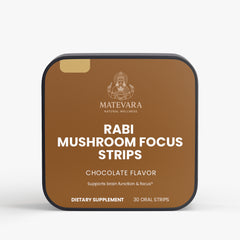
Lion’s mane is popular in the broader mushroom and nootropic category because people often associate it with focus and mental clarity. It is not part of the verified-data evidence set used for this article, so it is best kept in perspective.
If you are exploring mushroom-based options as one part of a broader routine, Matevara’s Premium Lion’s Mane Mushroom is one example of the kind of product readers often compare with herbs such as ashwagandha or nutrients such as omega-3s.
Evidence based brain health supplements at a glance
| Supplement | Primary Benefit | Mechanism of Action | Typical Daily Dose Range |
|---|---|---|---|
| Ashwagandha | May support stress resilience and cognitive performance | Adaptogenic activity with antioxidant and neuroprotective effects under study | 225 to 400 mg daily |
| Bacopa monnieri | Traditionally used to support memory and learning | Ayurvedic Medhya Rasayana, often used for mind nourishment | Varies by product and extract |
| Ginkgo biloba EGb-761 | May help stabilize cognitive function in targeted populations | Supports cerebral blood flow and antioxidant neuroprotection | 120 to 240 mg daily, with 240 mg/day used in research discussed above |
| Omega-3 fatty acids | Foundational support for cognitive health | Supports brain cell membrane structure and function | Varies by EPA and DHA content |
| Activated B vitamins | May support healthy methylation and homocysteine balance | Uses activated forms such as methylfolate and methylcobalamin | Varies by nutrient and individual need |
How to think about your options
A practical framework helps more than a longer supplement list.
Start by matching the pattern to the ingredient category:
- Stress-heavy mental fatigue: often points people toward ashwagandha
- Memory and learning support: often brings bacopa into the conversation
- Circulation-focused support: may lead to standardized ginkgo extracts
- Foundational nutritional support: often starts with omega-3s or targeted B vitamins
That is the value of combining Ayurvedic logic with modern research. Ayurveda names the pattern. Science helps clarify the extract, dose, and limits. Together, they make supplement choices more intentional.
How to Choose a High-Quality Brain Supplement
A smart ingredient in a weak formula won’t do much for you.
Quality isn’t a marketing bonus. It’s the difference between a product that reflects the research and one that only borrows the language of the research.

Read the form, not just the front label
Many labels say “brain support,” “focus,” or “memory.” Those phrases don’t tell you much.
You want to look for the ingredient form and the actual amount. This is especially important with B vitamins. As noted by the Pacific Neuroscience Institute, activated forms such as methylfolate and methylcobalamin may matter because they can bypass common MTHFR-related conversion issues, and supplementation can lower high homocysteine by 20% to 30% in deficient individuals in the context described in their overview.
That’s a real difference. “Vitamin B12” and “methylcobalamin” aren’t always the same thing in practice.
Look for signs that the brand is serious
A trustworthy supplement company makes it easier to verify what you’re buying.
Use this checklist:
- Standardized extracts: If research used a specific extract, the label should tell you what form you’re getting.
- Full dosing transparency: Avoid products that hide amounts inside proprietary blends.
- Third-party testing: Purity and potency matter, especially with herbs and oils.
- Clear safety guidance: Good brands don’t bury cautions.
- Accessible quality information: You should be able to find testing and certification details without guessing.
If you want to see what that transparency looks like in practice, Matevara’s page on product certifications and registrations shows the kind of information careful shoppers should look for.
Practical rule: If a label gives you more adjectives than facts, put it back on the shelf.
Red flags that deserve caution
Some products sound impressive until you slow down and read them.
Be careful with:
- Proprietary blends: They can hide underdosed ingredients behind a long ingredient list.
- Disease language: Responsible brands don’t claim a supplement can diagnose, treat, cure, or prevent disease.
- Kitchen-sink formulas: Too many ingredients make it harder to assess benefit and safety.
- No extract details: “Ginkgo leaf” or “ashwagandha blend” is less useful than a clearly identified extract.
A short video can make label reading easier if you’re new to this.
Keep your standard high
Brain health is too important for vague labels and borrowed credibility.
You don’t need a perfect product. You need one that tells the truth about what’s inside, respects the evidence, and gives you enough information to decide whether it fits your needs.
Creating Your Ayurvedic Brain Health Routine
You wake up after a full night of sleep, but your mind still feels scattered by 10 a.m. You make tea, open your laptop, answer messages, and promise yourself you will remember that supplement later. By afternoon, the bottle is still on the counter, and your attention feels pulled in six directions at once.
That pattern is exactly why Ayurveda puts so much weight on daily rhythm.
In Ayurvedic practice, Dinacharya means a steady routine that supports balance from morning to night. For brain health, that idea lines up well with modern neuroscience. Your brain runs best on repeated signals. Regular sleep, consistent meals, moments of recovery, and well-timed supplements act like a metronome for your nervous system. The goal is not to build a perfect wellness schedule. The goal is to give your mind cues it can rely on.
Start with the ground beneath the supplement
Medhya Rasayanas, the classical Ayurvedic herbs used to support memory, clarity, and mental resilience, were never meant to work in isolation. They were traditionally used within a larger pattern of living that protected attention and restored the mind.
A helpful way to frame this is simple. A supplement is like a seed. Your daily routine is the soil.
If the soil is dry from poor sleep, erratic meals, and constant stimulation, even a well-chosen herb has less to work with. If the routine is steady, the same herb often fits more naturally into your day and is easier to evaluate.
A daily rhythm that feels realistic
You do not need an elaborate plan. You need one you can repeat.
-
Begin the day with less input
Give your brain a few quiet minutes before news, email, or social media. Light, hydration, and a calm start help set your attention for the hours ahead. If you take a focus or stress-support herb, morning is often the clearest time to notice how it affects you. -
Pair supplements with a consistent cue
Ayurveda often ties practices to regular points in the day, such as waking or eating. That same principle helps with follow-through. Taking your supplement with breakfast or tea is easier to remember than relying on motivation alone. -
Protect the middle of the day
Mental fatigue often builds gradually, not all at once. A short walk, a breathing break, or five minutes away from screens can interrupt that buildup and help you return with more clarity. -
Treat evening as brain recovery time
Memory consolidation, emotional regulation, and attention all depend on sleep. A calmer evening routine gives tomorrow's mind a better starting point.
Match the herb to the pattern you are trying to change
Ayurveda becomes especially practical here.
Instead of asking, "What is the best brain supplement?" ask, "What is happening in my day that keeps pulling my brain off course?" That question leads to better choices.
If tension, overstimulation, and stress-related mental fatigue are the main pattern, ashwagandha may make sense as a routine anchor because it is traditionally used to support resilience under strain. If that is the direction you are considering, AshwaZen Ashwagandha for daily stress support is one example of an Ayurvedic-inspired option.
If your challenge is inconsistency, start even smaller. One herb. One time of day. One observation to track.
That approach respects both Ayurvedic logic and modern self-experimentation. It also helps you tell whether a change is helping.
Watch for patterns, not dramatic effects
Brain support usually shows up as steadiness.
You may notice that your thoughts feel less jumpy during stressful parts of the day. You may recover your focus more easily after interruptions. You may feel no clear difference at all. That matters too.
Give the routine enough time to become familiar, then assess it with plain questions. Do you feel calmer when work gets busy? Is your attention more stable? Are you sleeping well enough to support the rest of your efforts?
A good routine makes your mind easier to care for. It should not turn brain health into another source of friction.
Safety Precautions and Professional Guidance
You finish a long day feeling mentally drained, read about a promising herb, and want to start it tonight. That moment is exactly when a pause helps most.
In Ayurveda, Medhya Rasayanas are chosen with context in mind. The right herb depends on the person, their constitution, their symptoms, and the rest of their routine. Modern clinical practice follows the same basic logic. A supplement can be useful in one situation and a poor fit in another because dosage, health history, and drug interactions all matter.
Situations where extra caution matters
A quick safety check is especially important if you:
- Take prescription medications, especially those related to blood thinning, mood, sleep, blood pressure, or blood sugar
- Are pregnant or nursing
- Have a diagnosed medical condition
- Are planning surgery
- Want to combine several brain-support products at the same time
Ginkgo helps illustrate why this matters. It is often discussed for cognitive support, yet it can also affect circulation in ways that may not mix well with certain medications or medical conditions. A label rarely tells the whole story. Your clinician can help you judge whether a product makes sense for your specific situation.
Use guidance, not guesswork
If you are pregnant or nursing, check product-specific guidance before using any supplement. Matevara provides pregnancy and nursing safety information, which is the kind of clear reference responsible shoppers should look for.
Bring your full supplement list to your healthcare professional. Include capsules, powders, teas, tinctures, sleep blends, and anything you use only now and then. Small overlaps can add up, especially if several products contain herbs that calm the nervous system, influence blood sugar, or affect bleeding risk.
A careful review protects more than safety. It also helps you choose with more precision.
These statements have not been evaluated by the Food and Drug Administration. This product is not intended to diagnose, treat, cure, or prevent any disease.
Nourish Your Mind for a Vibrant Future
Brain health rarely comes down to one ingredient.
It usually comes from a pattern. Better sleep. Steadier stress response. Thoughtful nutrition. Careful supplement selection. A routine you can maintain without turning wellness into another source of pressure.
Ayurveda offers a rich language for understanding the mind through concepts like Manas, Buddhi, and Medhya Rasayanas. Modern neuroscience adds a different kind of clarity by testing mechanisms, forms, and dosage. Together, they give you a more useful map.
This represents the value of natural supplements for brain health. Not the promise of a shortcut. The chance to make informed, grounded choices that support your mind over time.
If you’re exploring Ayurvedic-inspired wellness with a science-aware lens, Matevara offers supplements and educational resources designed to help you evaluate ingredients, understand quality, and build a daily routine that fits real life.