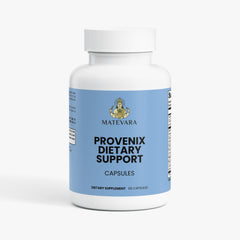
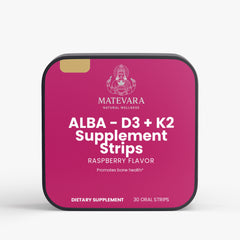
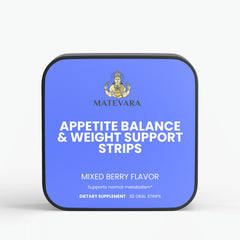

You pick up a bottle labeled “women’s multivitamin,” then another marked “50+,” then one that says “iron-free.” Suddenly the simple act of choosing a daily vitamin feels oddly high stakes.
If you have ever wondered whether skipping iron is smart or risky, you are asking the right question. Iron matters. But so does context. Your age, menstrual status, diet, digestive comfort, and lab work all shape whether supplemental iron belongs in your routine.
From both modern nutrition and Ayurveda, the same theme appears again and again. The right support depends on your current state, not a generic formula. In Ayurveda, your needs shift with life stage, digestion, and overall balance. In modern science, nutrient requirements also change over time, especially for women.
That is one reason multivitamins still matter. According to the NIH Office of Dietary Supplements fact sheet on multivitamin and mineral supplements, 72%–75% of women had adequate intakes of 17 key nutrients from food alone, and multivitamin and mineral supplement use increased that prevalence to 83%, with the greatest improvements for vitamins A and E and zinc. So the goal is not to take more of everything. The goal is to fill the gaps that exist.
If you are sorting through changing needs in midlife, this detailed guide to supplements for women over 40 can also help you think through the bigger picture.
For everyday routine questions, such as timing and consistency, Matevara also shares practical tips in this guide on the best time to take supplements.
Navigating the Supplement Aisle for Your Needs
Many women reach for a multivitamin because they want a simple baseline. More energy. Better coverage. Less guesswork.
Then the label creates a new problem. One formula includes iron. Another leaves it out. A third claims to be “gentle.” If you are not sure which one fits your body, that confusion makes sense.
Why the choice feels so personal
Iron is not like a trendy add-on ingredient. It is an essential mineral involved in oxygen transport and many core functions. But essential does not mean everyone needs extra iron in supplement form.
That is where many labels fall short. They present one formula as if it suits every woman at every age.
Ayurveda would not approach the body that way. It looks at what is happening in your system now. Is your digestion strong or sluggish? Are you in a menstruating stage of life, a perimenopausal transition, or postmenopause? Are you feeling depleted, overheated, heavy, dry, or sensitive? A thoughtful supplement choice starts there.
A better question than “Is iron good or bad”
A more useful question is this. Do you need supplemental iron right now?
For some women, the answer is yes. For others, an iron-free formula makes more sense because it supports broad nutritional coverage without adding a mineral that may already be sufficient.
If a supplement decision feels confusing, that usually means the formula is too general for a very specific body.
When you view multivitamins without iron for women through that lens, the category becomes much easier to understand. It is not a weaker option. It is a more targeted one.
What Exactly Is a Multivitamin Without Iron
An iron-free multivitamin is exactly what it sounds like. It is a daily multivitamin and mineral formula that includes vitamins and other minerals, but omits supplemental iron.

That does not make it incomplete. It means the formula is built for women who may already meet their iron needs through food, or who do better without extra iron in a supplement.
It is still a full-spectrum supplement
A well-made iron-free formula may still include:
- B vitamins for energy metabolism
- Vitamin D for bone and immune support
- Magnesium for muscle, nerve, and metabolic function
- Zinc for immune and skin support
- Folate and B12 for cellular health and nervous system support
- Antioxidants such as vitamins C and E
So when you see “without iron,” think “targeted,” not “missing.”
Why iron is different from many other nutrients
Your body needs iron, but it also stores it. That makes iron more nuanced than nutrients that are regularly used and excreted more easily.
If you are menstruating heavily or have been told you are low in iron, supplemental iron may be helpful under medical guidance. But if you are not losing much blood, or your levels are already adequate, extra iron may not add value.
Ayurveda offers a useful parallel. It teaches that heavier substances can be harder to process when agni, or digestive fire, feels low. Some women describe iron-containing supplements as sitting heavily in the stomach. Modern nutrition describes this in a different language, but the lived experience often overlaps.
A quick visual overview can help if you want the category explained in plain language.
Who usually looks for these formulas
Women often search for multivitamins without iron for women when they fall into one of these groups:
- Postmenopausal women who no longer lose iron through menstruation
- Women with sensitive digestion who dislike the stomach effects of iron
- Women with normal or high iron status on blood work
- Women who want other nutrients more than iron, such as vitamin D, magnesium, methylated B vitamins, or K2
That last point matters. Choosing an iron-free formula is usually not about removing support. It is about making room for the support that fits better.
Four Key Reasons to Choose an Iron-Free Multivitamin
Some decisions become clearer when you stop thinking in labels and start thinking in real-life scenarios. Multivitamins without iron for women tend to make the most sense when your body’s current needs no longer match a standard “one-size-fits-all” formula.

After menopause your iron needs change
This is the clearest and most evidence-based reason.
Once menstruation stops, your iron requirement drops. The Nature’s Best review of iron-free multivitamins notes that women ages 19 to 50 need 18 mg of iron daily, while after menopause that need falls to 8 mg daily, and the Mayo Clinic advises postmenopausal women who use multivitamins to choose formulas with little or no iron unless a healthcare provider says otherwise.
That shift surprises many women. They spent years hearing that women need more iron, which is true during reproductive years. But after menopause, the same supplement that once looked helpful may no longer be the best fit.
From an Ayurvedic perspective, this also aligns with changing tissue needs over time. Different stages of life call for different nourishment. A formula that once supported loss and replenishment may eventually feel excessive.
If you want a fuller overview of when iron itself may still be useful, Matevara’s article on the benefits of iron supplements for women is a helpful companion read.
Some women already have enough iron
You do not need to be postmenopausal for this to apply. Some women meet their needs through food and do not benefit from adding supplemental iron on top.
This is especially relevant if you eat iron-containing foods regularly or if blood work already shows adequate iron status. In that case, an iron-free formula lets you focus on other nutrients that are commonly harder to get in optimal amounts.
Here is the practical advantage:
| If your body needs | An iron-free multivitamin can help by |
|---|---|
| More bone support | Prioritizing vitamin D, magnesium, and related nutrients |
| Better energy coverage | Including B-complex vitamins in usable forms |
| Gentler daily support | Skipping a mineral that may feel unnecessary or heavy |
| Broader nutrient balance | Filling gaps without doubling up on iron |
You may feel better without supplemental iron
Some women stop taking their multivitamin for a simple reason. It makes them feel uncomfortable.
Iron can be hard on digestion for certain people. If a supplement leaves you feeling nauseated, heavy, or reluctant to take it consistently, the formula may not suit your body.
Ayurveda pays close attention to this kind of feedback. If digestion feels burdened, the issue is not only what a nutrient does on paper. It is also whether your system tolerates it well enough to make daily use sustainable.
A supplement only helps if you can take it consistently and comfortably.
For women with sensitive stomachs, an iron-free formula may feel much easier to live with. That can make the difference between abandoning a routine and consistently staying with it.
Certain health situations call for extra caution
Some women need to be especially careful with iron because of medical history, genetics, or low blood loss.
Examples include:
- Minimal blood loss from life circumstances such as menopause, hysterectomy, or certain hormonal methods
- Known iron overload concerns or a family history that raises questions about storage
- Provider-directed avoidance of extra iron based on labs or broader health context
Personalized care is paramount here. A bottle on a shelf cannot tell whether you need iron. Your symptoms alone cannot confirm it either. Blood work and clinical guidance matter.
Modern medicine and Ayurveda agree on something important here. Your body gives clues, but wise care still depends on proper assessment.
The decision is about fit, not fear
Iron-free does not mean anti-iron. It means selective. It means choosing a supplement that fits your life stage and current physiology.
For many women, that choice becomes relevant in midlife and beyond. For others, it matters because comfort, digestion, or lab values point them in that direction.
The smartest approach is calm and individualized. Not every women’s multivitamin should include iron, and not every woman should avoid it. The right formula depends on you.
Essential Nutrients Your Body Still Craves
When iron comes out of a formula, many women worry they are losing something foundational. In reality, the better question is what the formula includes in its place.
A strong iron-free multivitamin should still offer meaningful support for daily energy, mood, bone health, immune function, and healthy aging.

Activated B vitamins for energy and resilience
This is one of the biggest strengths of many iron-free formulas.
The Vital Nutrients Multi-Nutrients without iron product page notes that iron-free formulas for women often include 250 mcg methylcobalamin (B12) and 12.5 mg pyridoxal-5-phosphate (P5P), activated forms that directly support energy metabolism and neurotransmitter synthesis, including serotonin.
Why this matters in plain language:
- Methylcobalamin is a usable form of B12
- P5P is an active form of vitamin B6
- These forms may be easier for your body to use than less active versions
- They support the pathways your body uses to turn food into energy
This can be especially appealing if fatigue, stress, or brain fog are part of your daily picture.
Bone-supportive nutrients deserve more attention
For many women, especially in perimenopause and postmenopause, the omission of iron creates space to prioritize nutrients linked to bone health.
Look for support from:
- Vitamin D3
- Magnesium
- Vitamin K2
- Calcium, when appropriate for your diet and needs
These nutrients work together rather than in isolation. Vitamin D helps your body handle calcium appropriately. Magnesium supports many processes that affect muscle, nerve, and metabolic function. K2 often enters the conversation because of its role in bone-focused formulations.
If bone health is one of your main reasons for considering a multi, Matevara’s article on vitamin D3 benefits from stronger bones to more energy immunity offers useful background.
In midlife, many women do better when their multivitamin shifts from “more iron” to “smarter support.”
Folate that matches real-world biology
Folate can be confusing because labels use different names. You may see folic acid, methylfolate, or 5-MTHF.
A thoughtful formula often uses a more bioavailable folate source, especially if you want a multivitamin built around modern understanding of nutrient conversion and individual variation.
From an Ayurvedic lens, this reflects an old principle. Not all nourishment is equally usable for every person. The value of a nutrient depends partly on whether your body can readily transform and absorb it well.
Magnesium and minerals that feel gentler
Many women want their multivitamin to support calm energy, muscle comfort, sleep quality, and steady function, without digestive friction. Magnesium often plays a central role here.
Zinc also matters, especially for immune function and skin. Calcium may matter depending on diet and life stage. A balanced iron-free formula often uses the label space and capsule space more wisely by emphasizing these nutrients.
Antioxidant basics still matter
Do not overlook the fundamentals. Vitamins C and E often help round out a formula.
They are not flashy. They are foundational.
A quick label scan should show whether a product balances these basics or focuses so heavily on a few trendy ingredients that it misses everyday nutritional support.
A simple checklist for shopping
If you are comparing multivitamins without iron for women, a practical checklist helps:
- Energy support with activated B vitamins
- Bone support with vitamin D3, magnesium, and often K2
- Cellular support with a well-chosen folate form
- Mineral support that does not feel harsh
- Foundational antioxidants such as vitamins C and E
The strongest formula is not the one with the most ingredients. It is the one built around the needs you currently have now.
How to Read a Supplement Label and Choose Wisely
A front label can say “clean,” “advanced,” or “women’s health” and still tell you very little. The story that matters sits on the Supplement Facts panel and ingredient list.
If you want to choose well, read the label in this order.
First check the nutrient forms
The form of a nutrient often matters as much as the amount.
The Supplements Studio guide to multivitamins without iron notes that choosing Quatrefolic® (5-MTHF) may be helpful because it bypasses conversion issues tied to MTHFR polymorphisms common in 30-40% of people, and that TRAACS® chelated magnesium may be useful because magnesium deficiencies are found in 50% of U.S. women.
You do not need to memorize brand names. You do want to recognize the pattern. Bioavailable forms are often easier for the body to use.
Here is a simple comparison table.
| Nutrient | Standard Form (Lower Bioavailability) | Preferred Form (Higher Bioavailability) | |---|---| | Folate | Folic acid | 5-MTHF or methylfolate | | Vitamin B12 | Cyanocobalamin | Methylcobalamin | | Vitamin B6 | Pyridoxine hydrochloride | Pyridoxal-5-phosphate | | Magnesium | Magnesium oxide | Chelated magnesium such as glycinate or TRAACS® forms |
Then look for what is missing
An iron-free formula should say so clearly. But do not stop there.
Ask these questions:
- Does it contain the nutrients you desire?
- Are the doses balanced for daily use?
- Does the formula rely on inactive fillers more than active ingredients?
A shorter ingredient list is not always better, but a cluttered one can signal that manufacturing convenience mattered more than thoughtful formulation.
Methylated does not mean better for everyone, but it can be useful
You will often see “methylated B vitamins” on premium formulas. That usually refers to forms like methylfolate and methylcobalamin.
For some women, that matters because these forms are already in a more usable state. If you have ever struggled to understand why two multis list “folate” but use different names, this is the reason.
If unit sizes confuse you, especially on B vitamins and folate, Matevara’s explainer on what does mcg mean in vitamins can make label reading much easier.
Third-party testing is a trust signal
You cannot see purity or potency by looking at a capsule. That is why third-party testing matters.
Look for language that indicates independent testing for identity, purity, and label accuracy. Brands may phrase this differently, but the principle is the same. Outside verification adds confidence.
A beautiful label is marketing. Third-party testing is quality control.
Watch the “extras”
Some formulas add herbs, probiotics, enzymes, or whole-food blends. These can be thoughtful additions, but they should not distract from the basics.
Use this decision filter:
- Start with the core nutrients
- Confirm the forms are well chosen
- Check for quality testing
- Only then consider bonus ingredients
That sequence helps you avoid paying for an impressive-sounding formula that underdelivers where it counts.
A label-reading mindset that works
Do not ask whether the product sounds exciting. Ask whether it sounds appropriate.
The most helpful multivitamins without iron for women tend to be the ones that show restraint. Clear forms. Useful nutrients. Good testing. No unnecessary overload.
That kind of label usually reflects a smarter product.
The Matevara Approach Ancient Wisdom for Modern Needs
Ayurveda has long emphasized that nourishment should match the person, the season of life, and the strength of digestion. That idea feels especially relevant when you look at multivitamins without iron for women.
A formula can be scientifically impressive and still feel too heavy for your body. It can also be traditionally inspired and still benefit from modern validation. The strongest approach respects both.

Why Ayurveda adds useful perspective
In Ayurveda, agni refers to digestive fire. When agni is steady, you digest and assimilate well. When it feels low or burdened, even good inputs may not feel supportive.
That lens helps explain why some women do not thrive on standard multivitamins. The issue may not be that the formula contains “bad” nutrients. It may be that the blend does not suit their present state.
For women who no longer need extra iron, a lighter, more targeted formula can feel more aligned. Modern nutrition reaches a similar conclusion for different reasons, especially when life stage and tolerance change.
Bone-focused support matters more in midlife
For many women, especially in perimenopause and postmenopause, the omission of iron creates space to prioritize nutrients linked to bone health. A more thoughtful formula can particularly shine in this context.
According to a Medical News Today review on women’s multivitamins, 23% of women over 50 face osteoporosis globally, and Ayurvedic-inspired brands are well positioned to support this stage with nutrients like vitamin K2 and magnesium, which recent trials show may improve bone mineral density by up to 12% in postmenopausal women.
That does not mean every woman needs the same bone formula. It does mean many women benefit when their supplement strategy evolves beyond reproductive-age assumptions.
What a modern Ayurvedic brand should do well
A brand blending ancient wisdom with modern science should aim for all of the following:
- Life-stage awareness, rather than generic women’s formulas
- Bioavailable nutrients, so the body can use what it receives
- Gentle daily support, especially for digestion
- Transparent quality standards, including third-party testing
- Botanical intelligence, where herbs complement rather than distract
That kind of design respects both traditions. Ayurveda asks whether the formula suits the person. Modern science asks whether the ingredients and forms make physiological sense. Together, those questions lead to better products and better decisions.
Safe Dosing and When to Consult Your Healthcare Provider
Even the best multivitamin works better when you use it safely and consistently.
Take your supplement with a meal unless your clinician advises otherwise. Food often improves tolerance and can support absorption, especially for fat-soluble vitamins. Many women do best with breakfast or lunch.
Spacing also matters. If you take thyroid medication or other prescriptions, ask your pharmacist or clinician whether your supplement should be taken at a different time of day. Minerals can sometimes interfere with medication absorption.
A few practical safety habits
- Start with the label dose and do not assume more is better
- Use one multivitamin at a time to avoid accidental overlap
- Review your full routine if you also take single nutrients like vitamin D, magnesium, or B12
- Watch for duplication between a multivitamin and specialty formulas
If pregnancy is relevant for you, your folate needs and iron needs may be very different from someone in midlife. Matevara’s article on the role of folic acid vitamin B9 in pregnancy health gives important context.
The only reliable way to know your iron status is through blood work interpreted by a qualified healthcare professional.
That point matters. Symptoms alone cannot tell you whether you need iron, should avoid it, or are already getting enough.
Always consult a healthcare professional before starting any supplement, especially if you are pregnant, breastfeeding, managing a medical condition, or taking medication.
These statements have not been evaluated by the Food and Drug Administration. This product is not intended to diagnose, treat, cure, or prevent any disease.
Your Path to Personalized Nutrition
Choosing among multivitamins without iron for women becomes easier once you stop asking for a universal answer. Your needs change with age, diet, digestion, and health history. A good formula reflects that.
For some women, iron remains important. For others, especially later in life, an iron-free multivitamin may offer a more comfortable and better-matched kind of support. The most useful next step is simple. Look at your life stage, read the label closely, and confirm your iron status with your healthcare provider.
If you want another perspective on midlife supplement priorities, this guide to the best supplements for women over 40 is worth exploring.
When you combine self-awareness, good evidence, and a little patience, supplement shopping stops feeling random. It starts feeling personal. That is where better choices begin.
If you’re looking for a thoughtful, Ayurvedic-inspired approach to daily wellness, explore Matevara. Matevara blends traditional herbal wisdom with modern formulation standards, including third-party testing and plant-forward design, so you can build a supplement routine that feels both grounded and evidence-aware.